What is NAGPRA?
The Native American Graves Protection and Repatriation Act (NAGPRA) is a federal law passed on November 16, 1990. This law was enacted to resolve the disposition of Native American cultural items and ancestral remains under the control of Federal agencies and institutions that receive Federal funding, including museums. In January 2024, the law was updated with new regulations. The law and its regulations outline the rights and responsibilities of lineal descendants, Indian tribes, Native Hawaiian organizations, Federal agencies, and museums under the Act and provide procedures for complying with NAGPRA. Depending on the category of cultural item in question and its cultural affiliations, NAGPRA provides federally recognized tribes and lineal descendants with a process for transferring cultural items to them, also known as repatriation.
A significant update to the law in 2024 is the Duty of Care. Institutions, including museums, must make a reasonable and good-faith effort to incorporate and accommodate Native American traditional knowledge in the storage, treatment, or handling of ancestral remains and cultural items. They must obtain free, prior, and informed consent before allowing any exhibition of, access to, or research on ancestral remains or cultural items. Museums must now consult on the appropriate storage, treatment, display, or handling of cultural items.
Who must comply with NAGPRA?
Federal agencies and institutions that receive federal funds include museums, colleges, universities, and state or local agencies.
What are cultural items that fall under NAGPRA?
NAGPRA outlines four categories of cultural items: ancestral/human remains, funerary objects, sacred objects, and objects of cultural patrimony. Funerary objects were placed near an individual during a death rite or ceremony. Sacred objects are needed for the modern-day practice of traditional Native American religions. Objects of cultural patrimony are group-owned objects that have ongoing importance to the group.
What is OPM doing?
OPM currently cares for cultural items and ancestral remains. In most cases, these cultural objects were found during archaeological excavations that occurred before 1966. These holdings remain available for repatriation to Tribal Nations.
In compliance with the law, the museum published inventories in the Department of the Interior’s database when the 1990 law was enacted. Currently, the museum is updating those inventories while consulting with Tribal Nations for the upcoming January 2029 deadline outlined in the revised regulations to the law. Additionally, the museum is consulting with Tribal Nations on the duty of care for these items.
OPM regularly receives NAGPRA inquiries from across the country. We honor and value our relationships with Tribal Nations and welcome NAGPRA inquiries. Any queries we receive will be processed as quickly as possible. For research requests, please be aware that OPM consults with the appropriate Tribal Nations in alliance with our mission and recently updated regulations under the law before allowing access to sensitive collections.
OPM is committed to our valued relationships with Tribal Nations and working within the spirit of NAGPRA. Our policies prohibit the active collection of Ancestral remains, funerary objects, and known sacred objects.
Please contact our Museum Registrar, Emma Eisner, for any further information regarding NAGPRA
920-236-5766
Land Acknowledgement
The Oshkosh Public Museum would like to acknowledge that it occupies the ancestral, traditional, unceded, and contemporary lands of the Menominee and Ho-Chunk peoples. The land on which the museum resides was ceded in the 1836 Treaty of Cedars, which moved the seats of government. Today, those seats of government are located in other parts of Wisconsin and Nebraska, and are thriving, vibrant communities.
We understand that the Indigenous signatories understood the terms of the treaties differently from their white counterparts. We collectively understand that offering Land Acknowledgements or Land Recognitions does not absolve settler-colonial privilege or diminish colonial structures of violence that still exist today. Land Acknowledgements are only first steps in recognizing settler colonialism and must be preceded and followed by ongoing commitments to Indigenous Nations and communities. The Oshkosh Public Museum continues to work with our Indigenous communities through educational programs, exhibitions, and other collaborations.
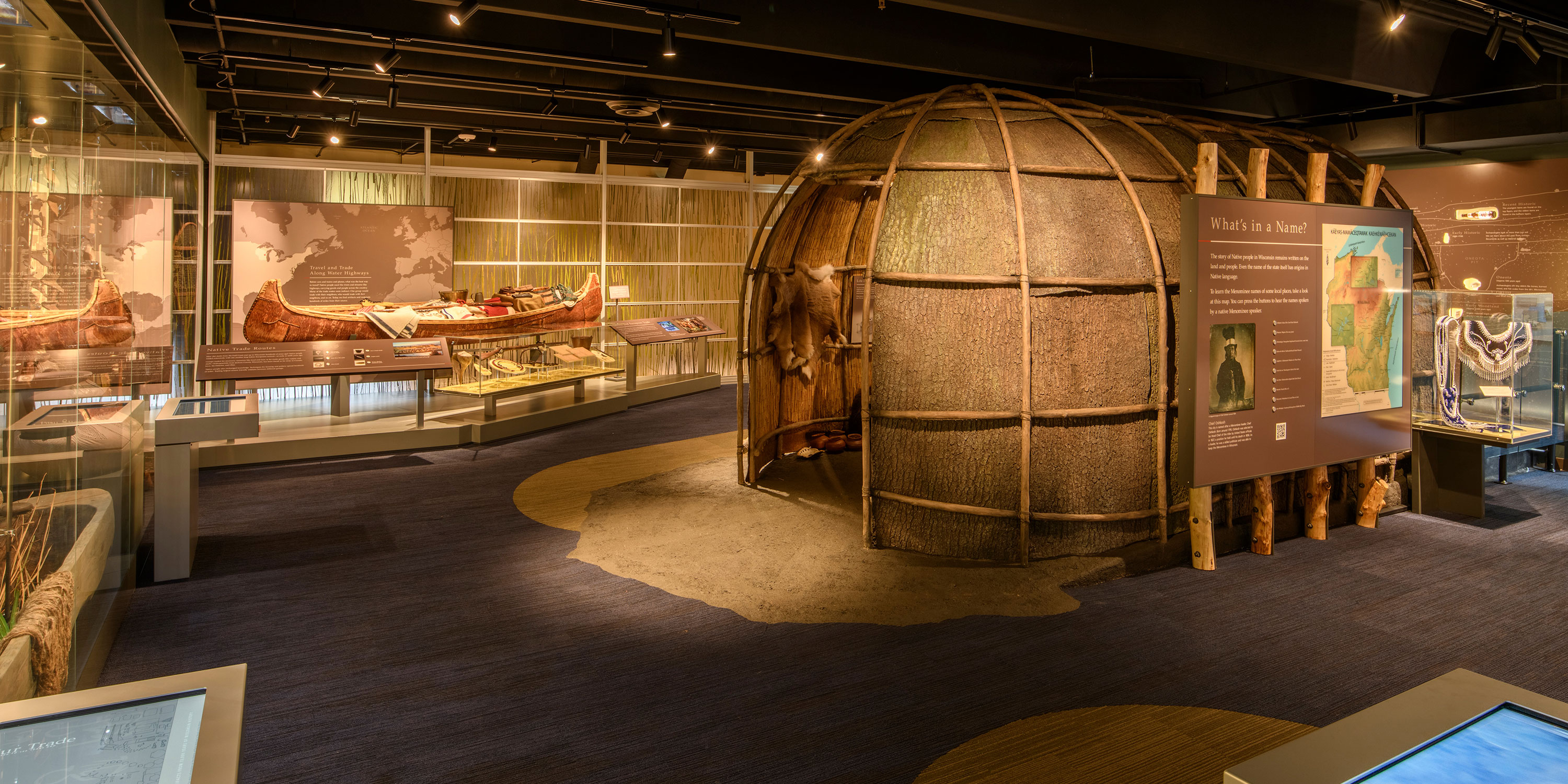
Including our current long-term exhibit, People of the Waters, which features a contemporary indigenous artist each year. Additionally, our Bridging Past to Present program series, which we are hosting for a second year in 2026. The series will include workshops, lectures, and hands-on opportunities that celebrate Native American cultural heritage of the past through the art of contemporary Native American Artists. They allow the public to discover connections, learn, and honor the cultural heritage of Tribal Nations through art, fostering engagement and enrichment.


